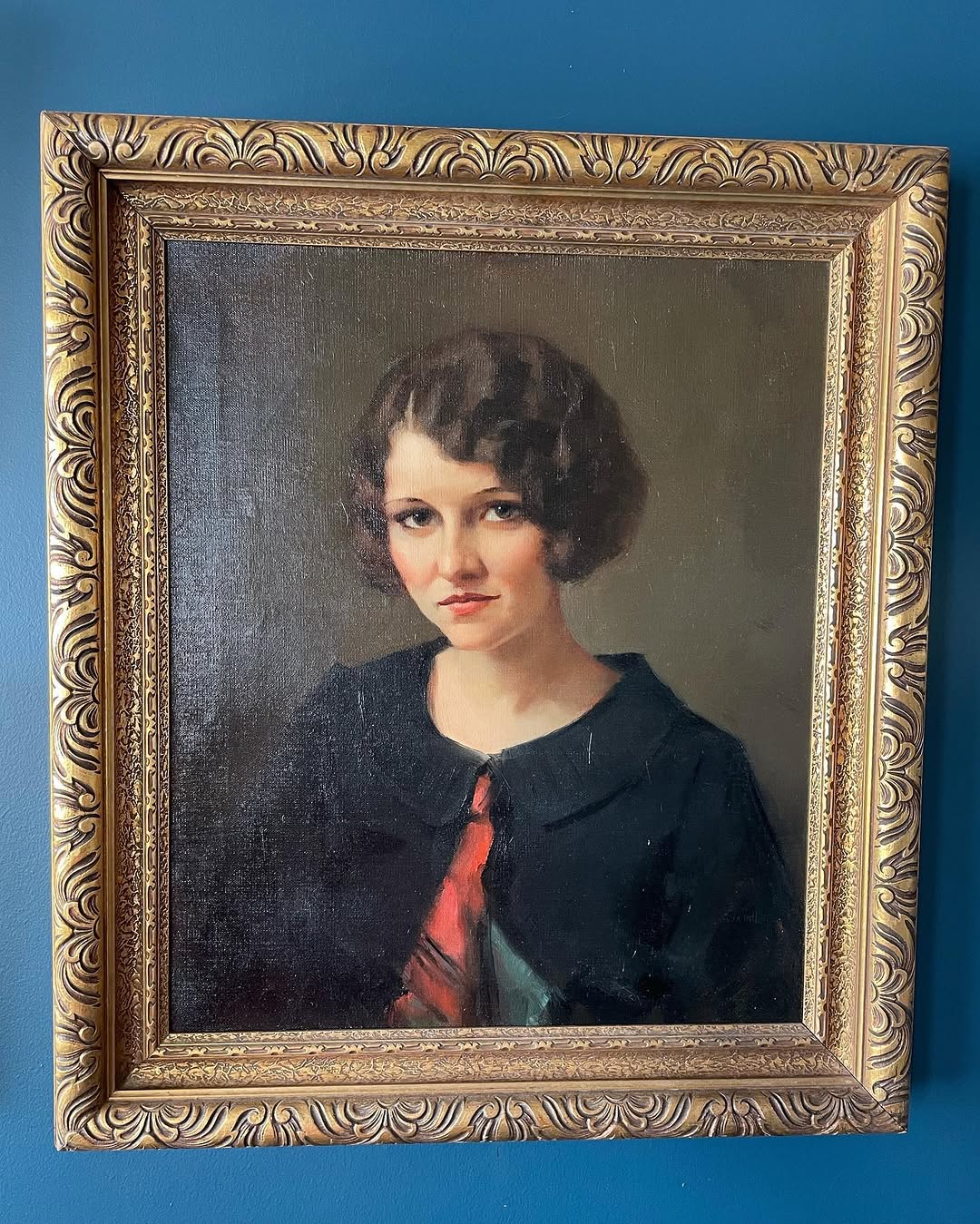

I gave myself a challenge: furnish and decorate my entire living room using only thrift store finds, for under $150.
Not “mostly thrift stores with a few Target purchases.” Only thrift stores. Goodwill, Salvation Army, local consignment shops — anywhere secondhand that I could walk into and find furniture or decor.
The goal wasn’t just to save money (though that was nice). It was to prove that you could create a cohesive, actually good-looking space without buying anything new.
Three weeks, eight thrift store trips, and $147 later, I had a fully furnished living room that looked intentional instead of thrown-together. People who visited assumed I’d spent way more. A few asked where I got my coffee table. When I said “Goodwill, $15,” they didn’t believe me.
This is the exact blueprint I followed — what I bought, where I found it, how I made it work together, and the mistakes I made so you don’t have to.
The $147 Complete Shopping List
Here’s everything I bought, in the order I bought it:
| Item | Store | Price | Condition Notes |
|---|---|---|---|
| Coffee table | Goodwill | $15 | Scratched wood, but solid structure |
| Floor lamp | Salvation Army | $8 | Brass, slight tarnish, working bulb included |
| Throw pillows (4) | Goodwill | $12 total | $3 each, all clean, one small stain |
| Large woven basket | Consignment shop | $6 | Perfect condition, use as blanket storage |
| Vintage mirror | Estate sale | $10 | Ornate gold frame, glass intact |
| Bookshelf | Facebook Marketplace (technically thrift) | $20 | Solid wood, needed cleaning |
| Picture frames (6) | Goodwill | $9 total | $1.50 each, mismatched |
| Ceramic vase | Thrift store | $4 | White, simple, no chips |
| Blanket | Goodwill | $7 | Grey knit, clean, no holes |
| Side table | Salvation Army | $12 | Small wood table, wobbly leg (fixed) |
| Books for styling | Library book sale | $3 | 6 books, hardcover, $0.50 each |
| Candles + holders | Goodwill | $5 | 3 candles, 2 holders |
| Curtain rod + rings | Habitat ReStore | $8 | Metal, some rust spots |
| Curtains (2 panels) | Goodwill | $10 | White, hemmed, clean |
| Large plant pot | Thrift store | $6 | Terracotta, no cracks |
| Area rug | Estate sale | $12 | 5×7, slight wear, no stains |
Total: $147
##What to Buy vs. What to Skip at Thrift Stores
Not everything at a thrift store is worth buying. Here’s what I learned after visiting 8 different stores in three weeks:
Always Worth Checking:
1. Solid Wood Furniture
If it’s real wood (not particle board or MDF), it’s almost always worth the price. You can sand it, paint it, refinish it. It’ll last decades.
How to tell it’s solid wood: Look at the edges and joints. Real wood has visible grain that continues around corners. Particle board has a smooth, uniform look with a thin veneer on top.
My coffee table and side table were both solid wood. The coffee table had scratches and water rings, but the structure was perfect. I sanded and painted it white for $8 in supplies (sandpaper + paint). New white coffee tables at Target start at $80.
2. Frames
Picture frames at thrift stores are usually $1-3 each. New frames are $10-20. Even if the frame is ugly, you can spray paint it.
I bought six mismatched frames for $9 total, spray-painted them all black ($6 for a can), and created a DIY gallery wall for under $15.
3. Baskets
Woven baskets, wire baskets, any kind of storage basket — these are always cheaper secondhand. I found a large woven basket for $6 that I use to store throw blankets. The same basket at HomeGoods is $25-30.
4. Mirrors
Large mirrors are expensive new ($50-100+). Thrift stores have them for $5-20. Even if the frame is dated, you can paint or replace it.
I found an ornate gold mirror for $10. I considered spray-painting it black, but decided I liked the vintage gold look. Left it as-is.
5. Curtains (If They’re Clean)
New curtains are $20-40 per panel. Thrift store curtains are $5-10 per panel, and they’re often higher quality (thicker fabric, better construction) because they’re from brands people donated after redecorating.
I found two white cotton panels for $10 total. I washed them twice (hot water + bleach), and they came out perfectly clean.
Usually Skip:
1. Upholstered Furniture (Couches, Armchairs)
Unless you can verify it’s been professionally cleaned, I don’t risk it. Bed bugs, odors, stains — it’s not worth saving $50 if the couch smells like smoke or has mystery stains.
Exception: If it’s leather or faux leather (easy to wipe down), and you inspect it thoroughly in good lighting, it might be fine. But I still avoid it.
2. Particle Board Furniture
If you tap it and it sounds hollow, it’s probably particle board. It won’t sand well, won’t hold up to refinishing, and often falls apart if you try to move it.
Skip it. Solid wood is worth waiting for.
3. Anything Broken That You Can’t Fix
I saw a beautiful floor lamp for $5, but the wiring was frayed and the switch didn’t work. Unless you’re willing to rewire it (I’m not), skip broken items.
The one exception: If it’s solid wood furniture with a wobbly leg, that’s usually fixable with wood glue and clamps. My side table had a wobbly leg. $3 of wood glue and an hour of drying time fixed it.
4. Anything With a Smell You Can’t Wash Out
If it smells like smoke, mildew, or strong perfume, and you can’t throw it in the washing machine, skip it. Odors are nearly impossible to remove from fabric that can’t be washed.
I learned this the hard way with a throw pillow that smelled faintly of cigarette smoke. I tried Febreze, baking soda, leaving it outside for two days… nothing worked. Ended up throwing it away.
How to Thrift Store Shop Like You Have a Plan
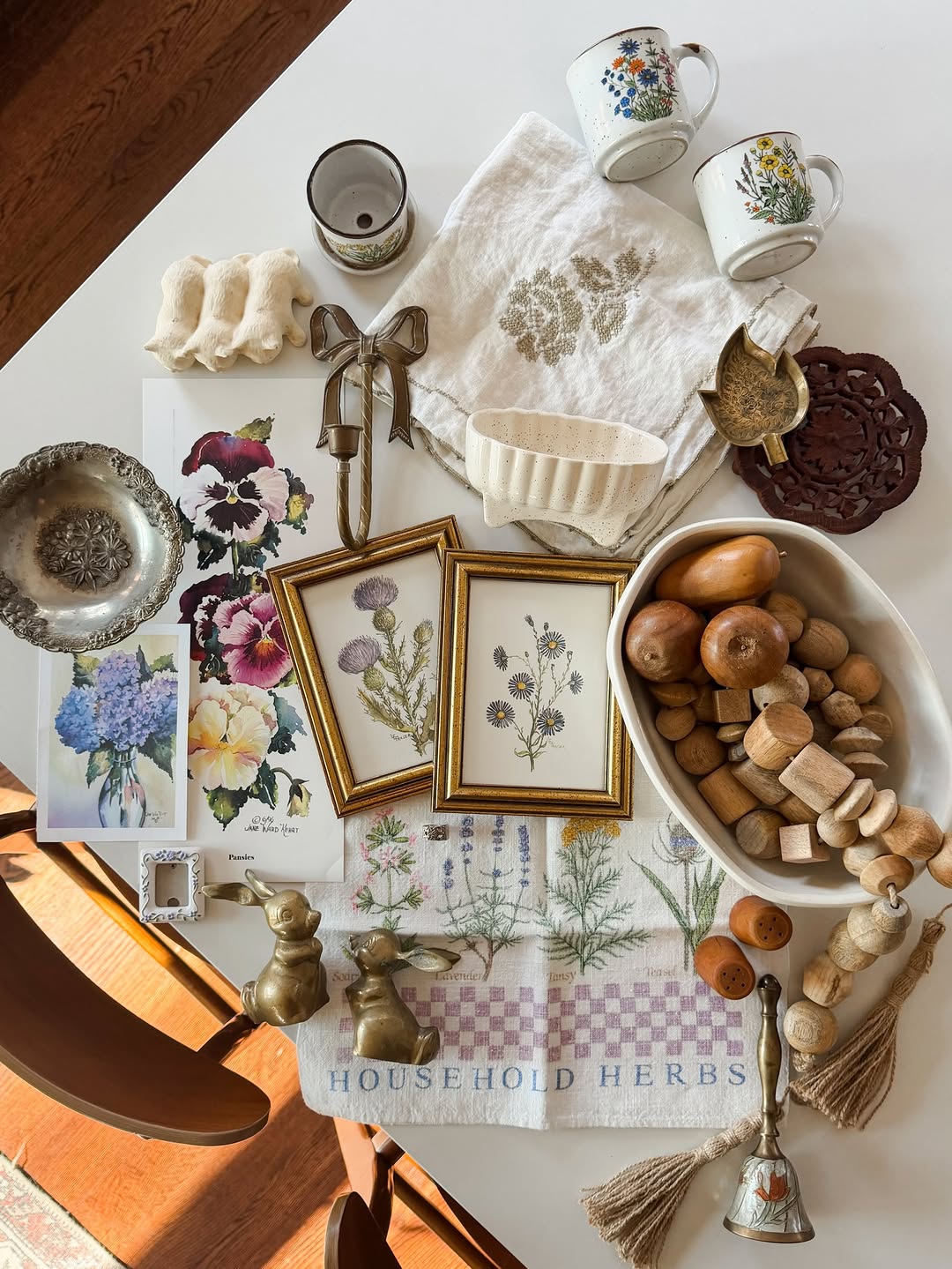
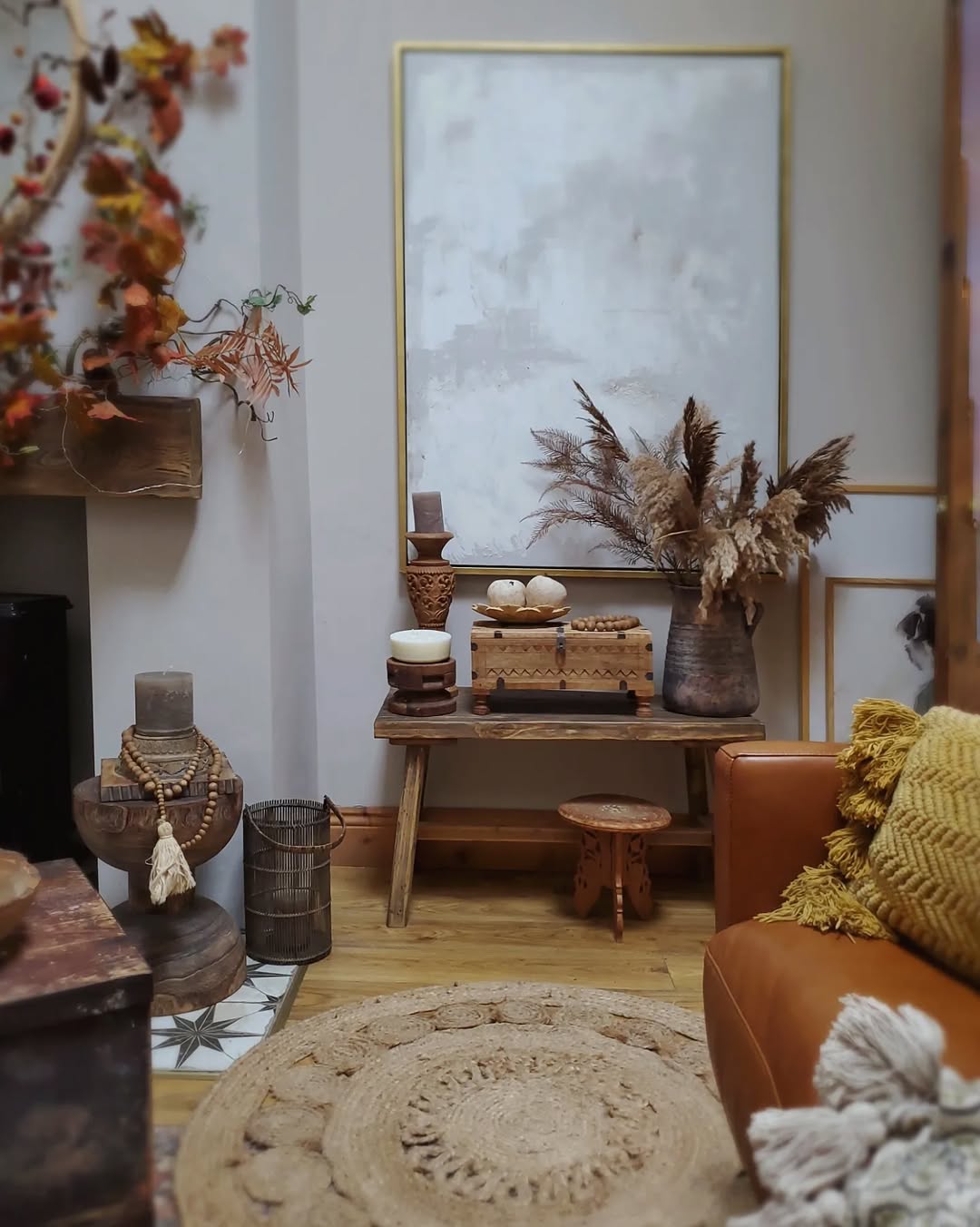

I wasted time (and money) on my first few trips because I went in without a strategy. Here’s what actually works:
Step 1: Measure Your Space (And Bring a Tape Measure)
I can’t tell you how many times I’ve seen people buy furniture at thrift stores without measuring first, only to realize it doesn’t fit when they get home.
Before you leave: Measure your space. Write down:
- Maximum width for a coffee table
- Height range for a floor lamp
- Wall space available for a bookshelf
Bring a tape measure with you. Thrift stores won’t hold items while you go home to measure.
Step 2: Go on Weekdays (Less Crowded, Better Selection)
Weekends are chaos at thrift stores. Everyone’s there. The good stuff gets grabbed fast.
I started going on Tuesday and Wednesday mornings (10 AM – noon). Stores had usually restocked from weekend donations, and I had first pick of new inventory.
Step 3: Check Multiple Stores in One Trip
If you’re serious about finding specific items, don’t just go to one Goodwill. Go to three or four in one afternoon.
I mapped out a route: Goodwill → Salvation Army → local consignment shop → Habitat ReStore. Total drive time: 45 minutes. I hit all four in two hours.
Some stores had nothing useful. Others had exactly what I needed. You have to cast a wide net.
Step 4: Inspect Everything Closely
I pull out drawers, flip furniture upside-down, check for wobbles, look for stains, smell fabric (yes, really).
What I check:
- Furniture joints (are they solid or loose?)
- Drawer glides (do drawers open smoothly?)
- Fabric (any stains, rips, or smells?)
- Wood (is it solid wood or particle board?)
- Legs (wobbles? missing hardware?)
If something fails more than one check, I skip it. If it’s just one fixable issue (like a wobbly leg), I negotiate.
Step 5: Negotiate (Politely) at Smaller Stores
Goodwill and Salvation Army usually don’t negotiate. But local consignment shops and estate sales often do, especially if an item has been there a while or has a minor flaw.
I got my woven basket marked down from $10 to $6 by pointing out a small tear in the lining. The shop owner shrugged and said, “Sure, $6.”
Never hurts to ask.
How to Make Mismatched Thrift Store Finds Look Cohesive
This is the hardest part. You’re not buying a matching furniture set. You’re finding random pieces and making them work together.
Strategy 1: Pick a Color Palette (And Stick to It)
I chose: white, grey, natural wood, and black accents.
Everything I bought had to fit into that palette. If I found a beautiful blue vase for $3 but it didn’t fit my colors, I didn’t buy it.
This was hard at first (I wanted to buy ALL the pretty things), but it made my final space look way more intentional.
Strategy 2: Paint Furniture the Same Color
My coffee table and side table were different styles, different finishes, totally mismatched.
I painted both white. Now they look like they belong together.
Cost: $8 for a quart of white paint, $4 for sandpaper, $2 for a cheap brush. Total: $14 to make two random pieces of furniture look like a set.
Strategy 3: Use Consistent Frame Colors
I bought six mismatched frames ($1.50 each). Different sizes, different styles, different colors.
I spray-painted all of them matte black ($6 for one can). Suddenly, they looked like an intentional gallery wall instead of random thrift store frames.
Strategy 4: Layer Textures (Not Colors)
Because my color palette was so neutral, I added interest through texture:
- Woven basket (rough, natural)
- Knit blanket (soft, cozy)
- Brass lamp (smooth, metallic)
- Wood furniture (warm, grainy)
Different textures in similar colors = cohesive but not boring.
The Total Time Investment

Thrift store shopping: 8 trips × 1.5 hours each = 12 hours
Cleaning/prepping items: 4 hours (washing curtains, wiping down furniture, cleaning frames)
Painting furniture: 3 hours (mostly waiting for paint to dry)
Arranging the room: 2 hours (moving furniture around until it felt right)
Total time: ~21 hours over three weeks
Is that a lot? Depends. If you enjoy thrift shopping and DIY, it’s fun. If you hate both, it’ll feel like a chore.
For me, it was worth it. I saved at least $400-500 compared to buying everything new from Target or HomeGoods.
What I Wish I’d Known Before I Started
1. Thrift stores restock on different days.
Some restock Monday/Thursday. Others restock randomly. If you ask the staff, they’ll usually tell you. Shop the day after restock for the best selection.
2. Estate sales are goldmines (if you go early).
I found my area rug ($12) and vintage mirror ($10) at an estate sale. But I had to get there at 8 AM on Friday (opening day) because the good stuff goes fast.
3. Bring cash.
Some smaller thrift stores and estate sales are cash-only. I missed out on a perfect bookshelf because I only had a card and they didn’t take it.
4. You won’t find everything in one trip.
I thought I could furnish my living room in one Saturday afternoon. It took three weeks and eight trips.
Be patient. If you need something immediately, buy it new. If you can wait, thrift stores will eventually have it.
How My Living Room Turned Out
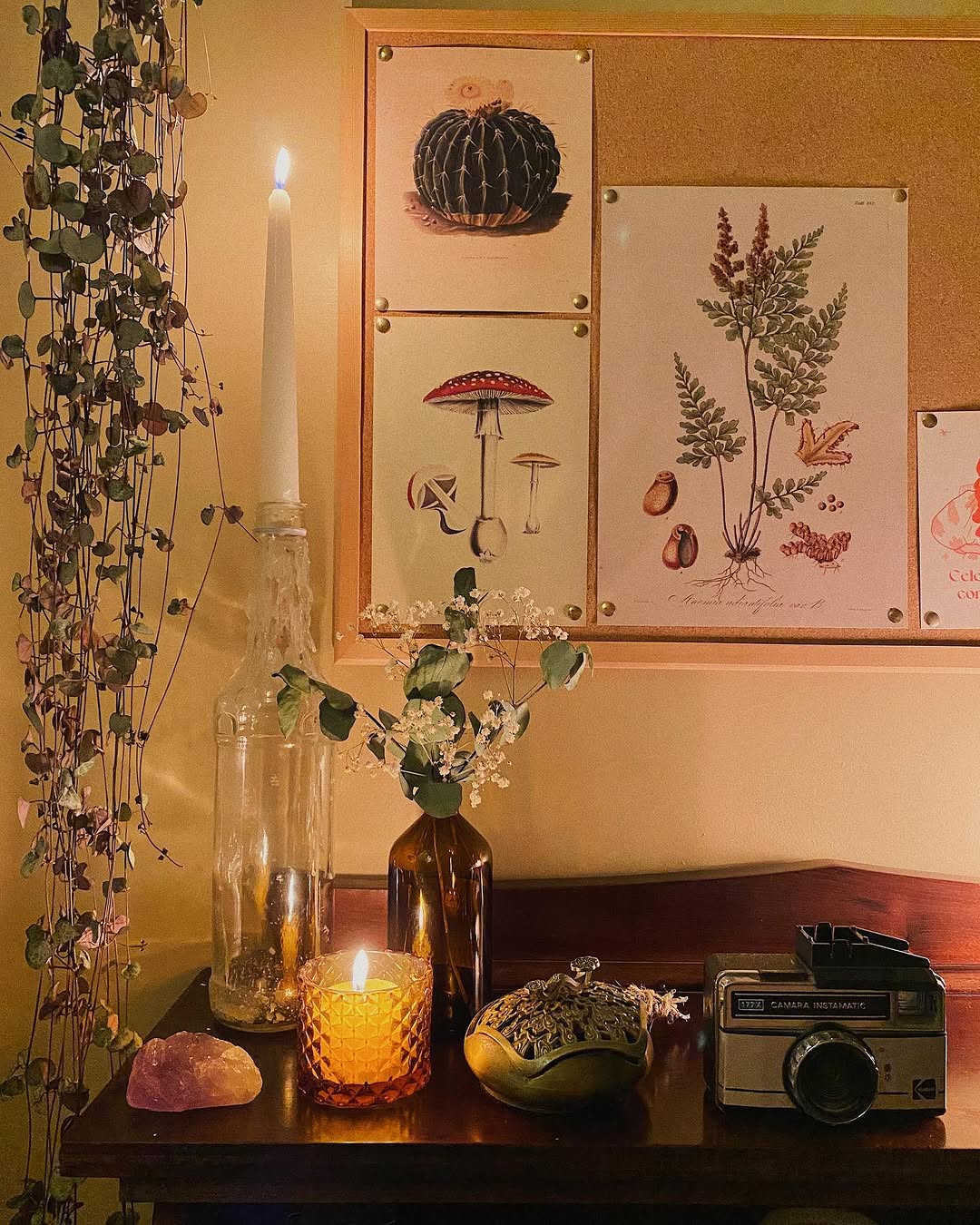


What worked:
- The white coffee table and side table look expensive (they cost $15 + $12 + $14 in paint/supplies = $41 total)
- The gallery wall adds personality (total cost: $15 for frames + paint)
- The brass floor lamp is a statement piece (cost: $8)
- The space feels cohesive despite being 100% secondhand
What didn’t work:
- The area rug has slight wear in the center (you can see it if you look closely, but I don’t care enough to replace it)
- The curtain rod has a few rust spots (I’ll replace it eventually, but it functions fine)
Would I do it again? Yes, but I’d be more selective. I bought a few things I ended up not using (a ceramic tray, a set of small frames that didn’t fit the wall). I could’ve saved $10-15 by being pickier.
The Biggest Mindset Shift: Imperfect Is Fine
The hardest part of thrift store decorating is accepting that nothing will be perfect.
The coffee table has a small dent in one corner. The blanket has one pulled thread. The bookshelf has a tiny scratch on the side.
But from normal sitting distance? You can’t see any of it.
I used to think I needed magazine-perfect decor. Matching everything, no flaws, Pinterest-worthy.
Now I know that’s not realistic on a budget, and honestly, homes with personality look better than homes that are trying too hard.
My living room isn’t perfect. But it’s mine, I furnished it for $147, and it feels like home.
That’s enough.
This article is based on a three-week thrift store shopping challenge I completed in November 2024. All prices and store locations are specific to suburban Pennsylvania and may vary by region. All items were purchased with my own money. This article is part of a larger budget home decorating guide covering multiple rooms and approaches.
Last updated: February 2025
Frequently Asked Questions
Yes. I furnished my entire living room for $147 using only thrift store finds including coffee table ($15), bookshelf ($20), floor lamp ($8), frames, baskets, blankets, and curtains. It took three weeks and eight thrift store visits to find everything, but the total cost was $400-500 less than buying new.
Best thrift store buys: solid wood furniture (coffee tables, side tables, bookshelves), picture frames ($1-3 vs $10-20 new), baskets for storage, mirrors, curtains if clean, lamps, throw blankets, and decorative items like vases and candles. Always inspect quality — check for solid wood construction, wobbles, and odors before buying.
Skip: upholstered furniture unless professionally cleaned (bed bug risk), particle board furniture (won’t refinish or last), broken items you can’t fix yourself, and anything with odors that can’t be washed out (smoke, mildew). If you tap furniture and it sounds hollow, it’s probably particle board — pass.
Choose a color palette before shopping (I used white, grey, black, natural wood). Paint mismatched furniture the same color to make them look like a set. Use consistent frame colors for gallery walls (spray paint all frames one color). Layer different textures in similar colors for interest without clashing.
Shop weekday mornings (Tuesday-Wednesday, 10 AM-12 PM) for less crowds and first pick of restocked inventory. Ask staff what day they restock and shop the day after. For estate sales, arrive at opening time on the first day — good items sell within hours. Bring cash since some stores don’t take cards.
For more budget home ideas, check out our guide to Best IKEA Hacks.
For more budget home ideas, check out our guide to Weekend Home Refresh.
Want the full framework? Our Budget Home Decorating: Complete 2026 Guide covers room-by-room budgets, shopping strategies, DIY projects, and the most common mistakes to avoid.
Leave a Reply