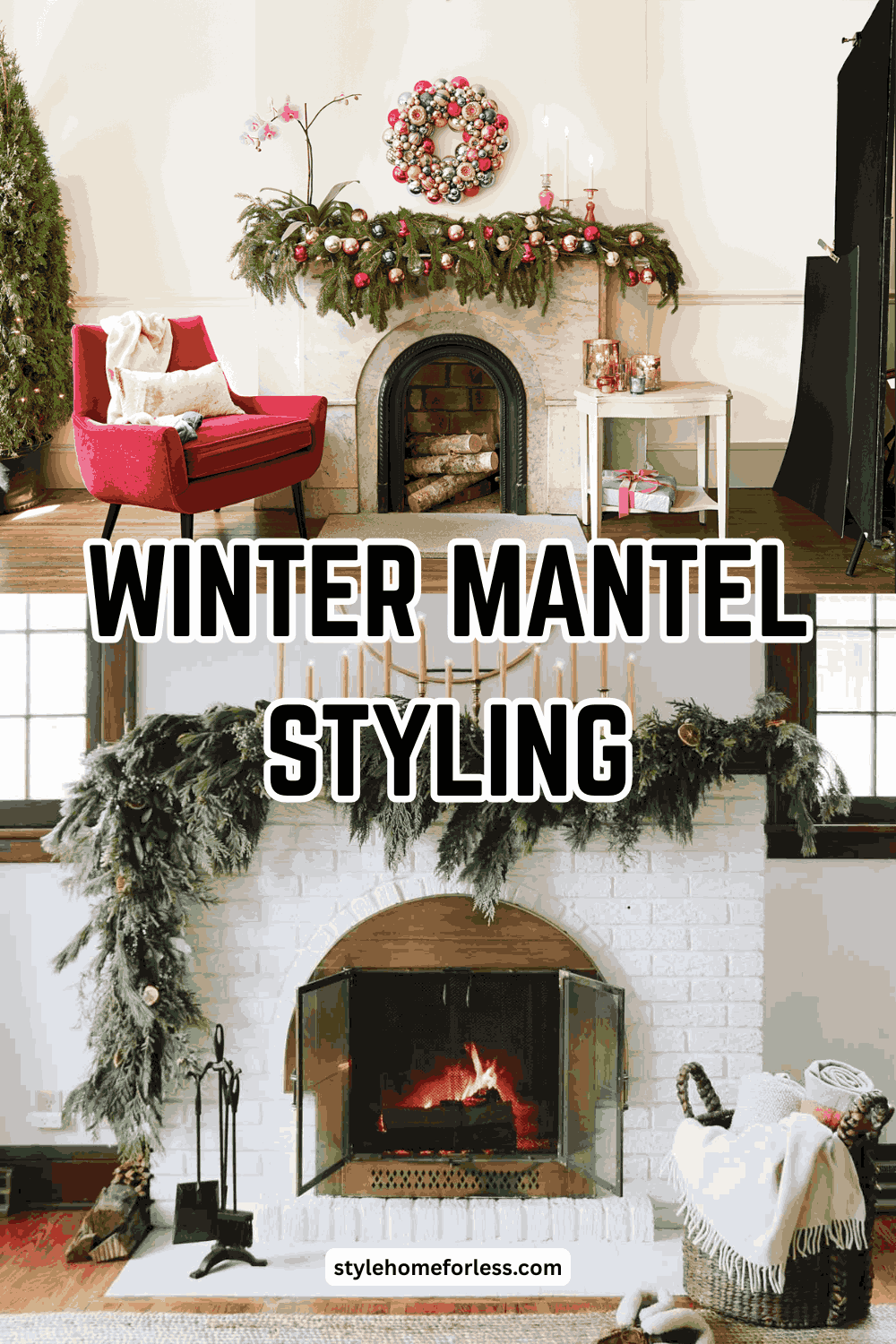
I used to take down my Christmas mantel on December 26th and leave it bare until spring because I couldn’t figure out what came next. Now I’ve developed a system where one mantel setup carries me all the way from Thanksgiving through February, with small, inexpensive updates along the way.
The secret: build in layers, with the base layer being seasonally neutral enough to stay all winter.
The Base Layer: What Stays All Season
A winter mantel base consists of elements that aren’t specifically Christmas, Halloween, or Valentine’s Day — they’re just winter. These stay up from November through February:
- Greenery: Faux or preserved eucalyptus, pine branches, or winter berries. IKEA VINTERFINT artificial greenery sprays ($3.99 each) look realistic and last indefinitely. Arrange them across the mantel shelf in an organic, non-symmetrical way.
- Candles at varying heights: Three pillar candles in cream or ivory, on different-height holders ($2.99 for IKEA JUBLA holders). Candles are instantly cozy and seasonally neutral.
- One textured neutral object: A woven basket, a small ceramic pot, a natural wood slice. HomeGoods consistently has good options for $4.99–$14.99.
These three elements form the foundation. Everything else layers over them for specific holidays or seasonal moments.
The Christmas Layer (December 1–25): $22 to Add
Over the base layer, add: stockings hung from clips ($4.99 for a set of 3 at IKEA TJUSIG series), a garland of jingle bells or cranberries ($6.99), small wrapped gift boxes (empty boxes, wrapped with paper you already have) for visual weight, and one holiday-specific element like a small nutcracker ($9.99 at Target) or a miniature Christmas village piece.
The key: keep the Christmas additions removable. Don’t hot-glue anything to your base greenery or mantel. Everything should lift off cleanly.
The New Year’s Eve Layer (December 26 – January 1): $15 to Swap
Remove the stockings, wrapped boxes, and Christmas-specific pieces. Add: metallic elements. A cluster of gold and silver balloons (tied to the hearth or weighted by a vase), a string of battery-operated fairy lights draped along the front edge of the mantel, and a simple “2025” banner ($3.99 at Party City or made from cardstock and a marker). The greenery and candles stay exactly where they are.
This transition takes about 20 minutes. The mantel looks completely different — festive but in a NYE way — without starting over.
The January Through February Layer: $0 to Swap
After January 1st, remove all the metallic and NYE elements. You’re left with the base layer: greenery, candles, one neutral object. This is your winter mantel, and it’s genuinely lovely on its own. Add a small framed photo, a stack of books with interesting spines, or a small plant (IKEA pothos, $4.99) and you have a styling that works through February.
For Valentine’s Day in February: tuck a few small red or pink elements into the greenery (a single dried rose, some red ribbon tied around the candle holders) for a subtle seasonal nod without a full holiday overhaul.
What to Put on a Mantel If You Don’t Have a Fireplace
No fireplace? Create a “mantel moment” using a tall console table, a floating shelf at 5–6 feet, or the top of a bookcase. The same layering principles apply. I used the top of my IKEA BILLY bookcase as a mantel for three years in an apartment without a fireplace — at 6 feet tall, it had exactly the right presence and scale.
The Under-$30 Mantel Supply List
- IKEA VINTERFINT greenery sprays (3): $11.97
- IKEA JUBLA candle holders (set of 3): $8.97
- 3 pillar candles, cream (HomeGoods): $8.99
- One textured neutral object: $4.99–$14.99
- Total base layer: under $45
Holiday layers (Christmas, NYE) cost an additional $15–$25 each. The investment is made once and each layer is reused year after year.
Frequently Asked Questions
What do you put on a mantel for winter (after Christmas)?
Greenery (eucalyptus, pine, winter berries), candles at varying heights, and one textured neutral object — a woven basket, ceramic pot, or wood element. This combination works all winter without being holiday-specific. Add seasonal touches for NYE (metallics) and Valentine’s Day (small red/pink accents) over this neutral base.
How do you style a mantel on a budget?
Build in layers using the rule of three: one tall element, one medium, one low. Use faux greenery (IKEA VINTERFINT, $3.99/spray) as a base that lasts for years. Add candles at varying heights (IKEA JUBLA holders, $2.99 each). Style everything in odd numbers — 3 candles, not 2 or 4. Resist the urge to fill every inch of the shelf.
What height should mantel decorations be?
The tallest element should be about two-thirds the height of the mirror or art above the mantel. If your mirror is 24 inches tall, your tallest element should be about 16 inches. This prevents decorations from blocking the mirror while maintaining visual balance. Vary heights across the shelf — a straight line of same-height objects looks flat and boring.
How do you transition from Christmas to New Year’s on the mantel?
Remove specifically Christmas elements (stockings, ornaments, Christmas-specific figurines) and add metallic elements: gold/silver balloons, fairy lights, a “Happy New Year” or year number element. The greenery and candles from your Christmas mantel stay in place — you’re just editing, not starting over. The transition takes about 20 minutes.
The Bottom Line
The layered mantel approach means I spend under $75 total for an entire winter of beautiful styling across four different holiday moments. Each transition takes 20–30 minutes. The base layer is versatile enough that I’ve gotten compliments on my mantel in January, which used to be the month it looked completely bare.
I’m planning a spring mantel guide next — using the same layered approach to transition from winter into spring botanicals. That’s coming in March.
Leave a Reply