
Three years ago, a friend of mine — an actual interior designer — walked into my living room and said, “I can tell you exactly what’s making this room feel cheap, and none of it costs much to fix.” I was simultaneously relieved and slightly offended. But she was right about everything, and what she told me that afternoon changed how I shop for and style my home entirely.
Here’s what I learned, plus the additional tricks I’ve picked up since then — all tested in real rooms on a real budget.
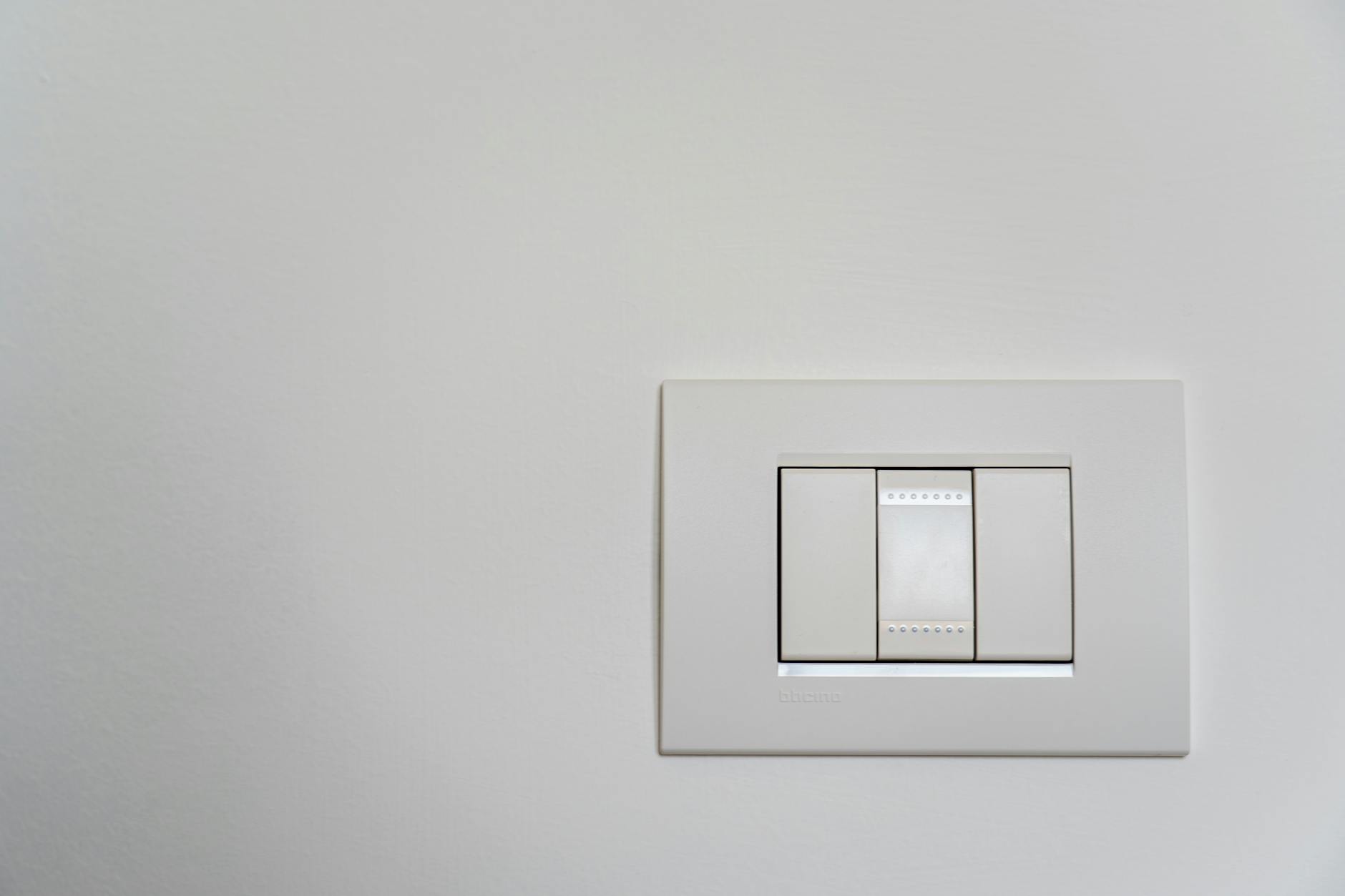
1. Upgrade Your Light Switch Plates to Decorator Style — $8
Standard light switch covers are the beige plastic ones that scream “builder grade.” Replacing them with Decora-style rocker switch covers (the larger, smooth rectangular ones) costs $1.50–$3.50 per plate at Home Depot — Leviton makes excellent ones. Swap the switches themselves to rocker switches ($3.99 each at Home Depot) at the same time. The combination makes every room look more finished and modern. It’s the kind of detail that people can’t identify but subconsciously register.
2. Replace Lightbulbs with Warm White (2700K) Throughout — $22
This is the single most impactful $22 you’ll spend on your entire home. Swap every bulb to 2700K warm white LEDs. The Feit Electric A19 Soft White 60W Equivalent at Home Depot is $9.97 for a 6-pack. Warm white light makes rooms feel cozy, expensive, and polished. Cool white light (4000K+) makes rooms feel like an office or a hospital. The color temperature of your light is why some homes feel warm and inviting and others don’t, despite similar furniture.
3. Use Paint in a Matte or Eggshell Finish — Not Flat
Flat paint is the default in cheap homes. Eggshell finish is the standard in well-done homes. The difference: eggshell has a very slight sheen that bounces light and makes colors richer and more dimensional. Behr Premium Plus Eggshell at Home Depot is $36.98/gallon — the same price as their flat — and it’s washable, which flat is not.
One color strategy that makes rooms look immediately more expensive: paint your walls and your trim the same color. It’s called “color blocking” and it eliminates the choppy look of contrast trim while making your ceiling seem higher. Benjamin Moore “White Dove” (OC-17) is one of the most used warm whites in high-end interior design. A quart of Behr close-match “Swiss Coffee” is $9.98 and works beautifully for trim.
4. Layer Your Lighting — Every Room Needs 3 Sources
Expensive-looking rooms are never lit by a single overhead light. The rule designers use: ambient (overhead), task (lamps), and accent (candles, picture lights, string lights under a shelf). My living room used to have one overhead can light. Adding a floor lamp from TJ Maxx ($34.99) and two IKEA SYMFONISK table lamps ($59.99 each — worth the investment) turned it from a room that felt like a waiting area into something that photographs like a lifestyle blog.
5. Add Crown Molding with Paintable Foam — $35 for a Room
Real wood crown molding is expensive to buy and requires a miter saw to install properly. Paintable foam crown molding (find it at Home Depot under the “Architectural Depot” brand — $12–$18 for an 8-foot piece) achieves the same visual effect. It applies with construction adhesive and paintable caulk, takes about 2 hours for a 12×12 room, and makes walls look like they were finished by a high-end builder. Paint it the same color as your ceiling and it disappears — in the best way.
6. Go Bigger on Art Than You Think You Should
The most common mistake people make with wall art is buying things too small. A gallery of tiny pieces scattered across a large wall looks cheap. One large piece (24×36″ minimum for most living rooms, 36×48″ for large walls) looks intentional and expensive.

Large art doesn’t have to cost much. Desenio (desenio.com) sells high-quality prints starting at $8.99. Printed at Framebridge, a 24×36″ poster print framed beautifully costs $89 — which sounds like a lot until you see it on the wall. For free art: Society6 offers digital downloads, and a simple black-and-white photo printed through Walgreens at 20×30″ costs $11.99.
7. Replace Cabinet Hardware Throughout — $45
This is the flip that costs the least and impresses the most. If your kitchen and bathroom cabinets have dated knobs and pulls, swapping them is a 30-minute project that makes the whole space look updated. Matte black or brushed brass are the two finishes that read as modern and elevated right now. Amazon has sets of 10 cabinet pulls for $18–$35 — search “Goldenwarm cabinet pulls” for consistently good reviews.
8. Use Matching Storage Containers on Shelves — $20
Random objects on shelves look like clutter. The same objects in matching containers look like a styled display. IKEA DRONA boxes ($4.99 each) in the same color across all visible shelves create instant visual harmony. IKEA TJENA boxes ($6.99 each) have a printed pattern that looks more styled. The key: use only 2–3 matching containers per shelf, leave some breathing room, and add one organic element (plant, stone, candle) per shelf.
9. Add Wainscoting with Peel-and-Stick Panels — $39
Wainscoting (the paneled look on the lower half of walls) is a hallmark of older, well-built homes and looks genuinely expensive. Traditional wainscoting is a major carpentry project. Stick-on wainscoting panels (Amazon, $34.99 for a pack covering about 30 square feet) achieve the same effect with peel-and-stick installation. Add a strip of chair rail molding above them ($4.99 at Home Depot) and paint the upper wall a complementary color. The result looks like a historic renovation.
10. Upgrade Your Bedding — One Set of Good Sheets Changes Everything
You don’t need expensive furniture if your bed looks luxurious. A white duvet cover with a textured throw blanket and 3-4 layered pillows is the hotel bed formula. The IKEA KARITMA duvet cover ($39.99) is 100% cotton and photographs beautifully. The Threshold Performance Sheet Set at Target in white ($39.99) has a thread count that competes with brands at twice the price.
The formula for a designer-looking bed: solid white duvet, two sleeping pillows in matching white cases, two Euro shams (24×24″ square pillows — IKEA GULLKLOCKA is $7.99 each), and one throw blanket draped diagonally across one corner. It’s the same setup used in luxury hotel rooms and it works every time.
11. Use Odd Numbers in Decor Arrangements
Interior designers follow the “rule of threes” obsessively. Objects arranged in threes (or fives, or sevens) look balanced and intentional. Objects in pairs or fours look static. On a shelf: one tall object, one medium, one low. On a side table: one lamp, one book stack, one small plant. On a coffee table: one tray (containing two objects), one stack of books, one candle. It sounds rigid but it actually creates a more natural, edited look.

12. Add a Tray to Every Surface — $9
A tray instantly “curates” any surface. Without a tray: random objects on a coffee table = clutter. Same objects inside a tray = a styled vignette. HomeGoods consistently has good trays for $9.99–$19.99. IKEA KRAGSTA coffee table tray is $6.99. Once you see what a tray does to a surface, you can’t unsee it. I now have six in my apartment.
13. Layer Rugs for Depth and Luxury
One of the more counterintuitive styling tricks: layer a smaller patterned rug over a larger neutral one. A flat-woven jute rug (IKEA LOHALS, $49 for 5×8″) as a base under a smaller, more decorative rug creates depth and visual interest that a single rug can’t achieve. This is a trick used in high-end interior photography constantly. It also extends the life of both rugs since they share wear.
14. Fill Corners with Plants — The Free-ish Fix
Empty corners make rooms feel unfinished. A large floor plant — fiddle leaf fig, bird of paradise, snake plant — anchors a corner and adds the organic element that makes a room feel alive. IKEA carries live plants; a large fiddle leaf fig is $24.99 there. At Home Depot, bird of paradise plants run $34.99 for a 3-foot specimen. A single large plant in a corner does more visual work than $200 of small accessories.
15. Use Curtains as Room Architecture
Floor-to-ceiling curtains from wall to wall create the feeling of architectural height and grandeur. This costs the same as regular-height curtains — the trick is just using longer panels (108″ instead of 84″) and mounting the rod close to the ceiling. IKEA HILLEBORG curtains ($59.99 for a pair of 118″ panels) have a subtle sheer quality that diffuses light beautifully. This single change makes a 9-foot ceiling feel like 12 feet.
Frequently Asked Questions
What makes a home look expensive vs. cheap?
The biggest differences: lighting quality (warm, layered vs. single overhead cool light), scale of art and furniture (too small = cheap), hardware finishes (mixed or dated vs. cohesive matte black or brass), and editing (every surface having breathing room vs. cluttered). None of these require expensive furniture.
What color palette makes a home look most expensive?
Warm neutrals with one strong accent. Benjamin Moore “White Dove” (warm white) on walls, natural wood tones in furniture, and one repeated accent color (terracotta, deep green, navy) in pillows, throws, and ceramics. Avoid pure white (feels sterile), gray (overdone and cold), and matching furniture sets (too uniform). The warm neutral palette with natural materials photographs like a $10,000 renovation even when the furniture is from IKEA.
How do I make a cheap sofa look expensive?
Three steps: (1) Add a textured throw blanket draped diagonally across one arm — $19.99 at HomeGoods. (2) Replace the original cushions with ones that have a slightly more structured fill — IKEA GURLI covers ($9.99) with new IKEA INNER foam inserts ($9.99) are firmer than most stock sofa cushions. (3) Add a tray with 2-3 objects to the coffee table in front — this draws the eye forward and away from the sofa itself.
Does expensive-looking home decor have to be expensive?
No — and the research backs this up. The things that make rooms feel expensive (lighting quality, scale, editing, cohesive color) cost almost nothing to implement. The things people spend money on (matching furniture sets, trendy accent pieces, decorative objects) have the least impact on how expensive a room feels. The most expensive-looking room I’ve ever decorated personally had furniture entirely from IKEA and HomeGoods.
The Bottom Line
The secret my designer friend shared with me isn’t a secret at all — it’s that expensive-looking rooms are about editing and proportion, not price tags. Get the light right, use proper scale, and let surfaces breathe. Everything else is noise.
I’m documenting my next room challenge: making a 10×12 bedroom feel like a luxury suite for under $200. Photos and full breakdown coming next month — subscribe so you don’t miss it.
Leave a Reply