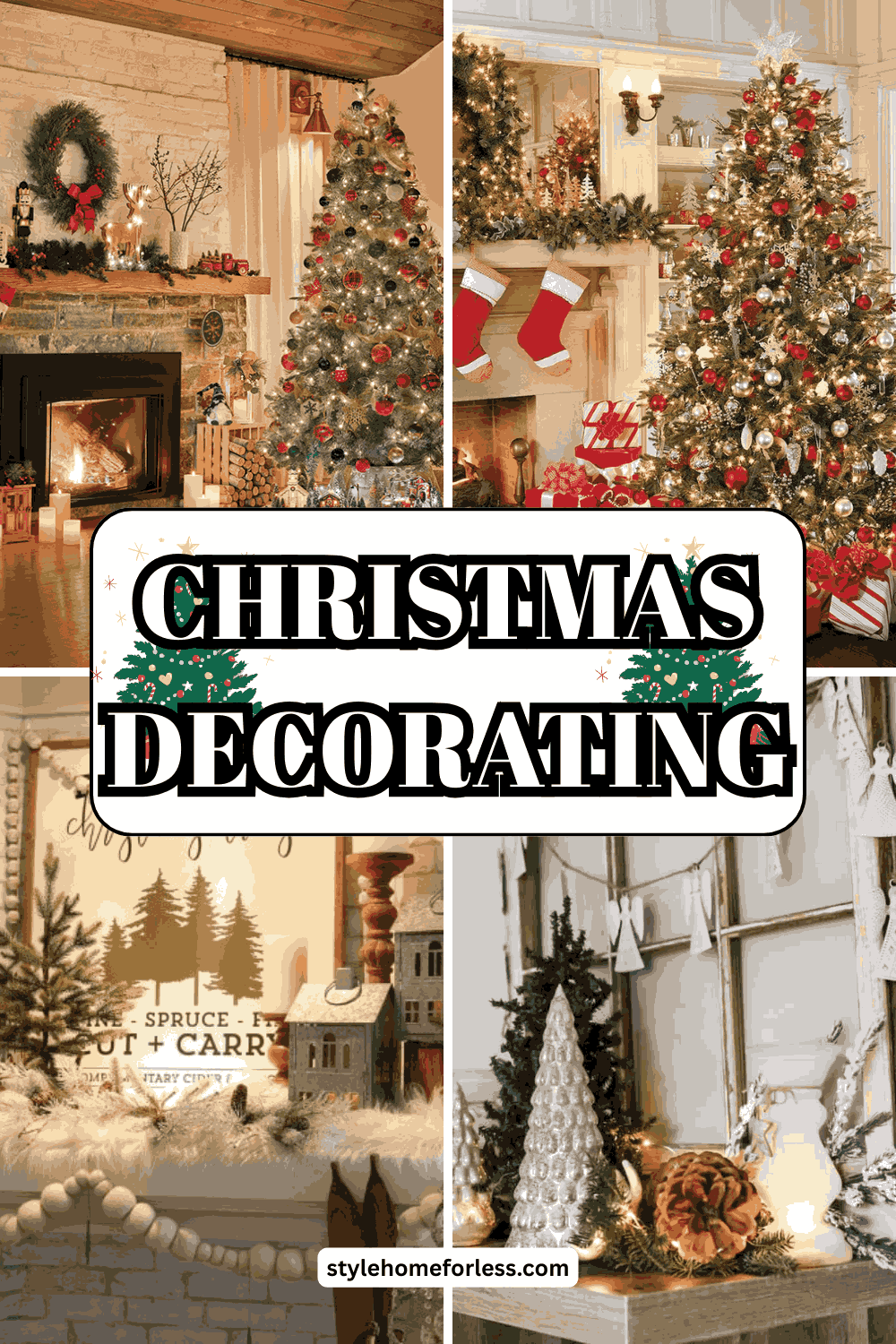
The $500 Christmas decor budget and the $50 budget can both produce beautiful results — the difference is in what you buy and how you prioritize. I’ve done Christmas at both ends of this range (sometimes by choice, sometimes by necessity), and what I’ve learned is that the correlation between budget and beauty is much weaker than you’d think.
Here’s what each budget level actually gets you, with specific products and sources.
The $50 Christmas
This is the bare-essentials Christmas that still looks real. Here’s exactly how to spend $50:
- Tree: 24-inch pre-lit tabletop tree from Target, $19.99. Place on a console or side table at eye level.
- Ornaments: One $9.99 set from Target Wondershop (24 assorted balls). Don’t supplement — restraint is the point at this budget.
- String lights: 33-foot warm white string lights from Amazon, $8.99. Drape along one window or shelf.
- Greenery: One sprig of fresh pine from the grocery store ($2.99), placed in a vase on the dining table.
- Candles: 4-pack of IKEA pillar candles ($3.99) with IKEA holders ($2.99 for a set of 3).
- Total: $48.93
The key to the $50 Christmas: do three things exceptionally well (tree, one string light area, one table arrangement) rather than spreading $50 across 15 different areas and doing nothing well.
The $150 Christmas
This budget gets you a full-room experience. The additions over the $50 budget:
- Full-size tree: 5-foot slim pre-lit tree from Home Depot, $49.99. Replace the tabletop tree.
- More ornaments: Two more ornament sets ($9.99 each) to fill the larger tree. Choose ornaments that add a second color or texture.
- Tree skirt: A simple linen or burlap tree skirt from TJ Maxx, $14.99.
- Mantel starter: IKEA VINTER pine garland ($14.99) + 2 additional candle holders ($5.98 at IKEA).
- Outdoor wreath: Fresh 24-inch wreath from Home Depot, $19.99.
- Total new additions: $114.94
- Total with base: $163.87 (rounds to $150 if you skip the outdoor wreath)
The $300 Christmas
At $300, you’re adding quality and areas. Building on the $150 base:
- Better tree: Upgrade to a 6.5-foot full-profile pre-lit tree, $79.99–$99.99 at Home Depot or Walmart. This is where people really invest — a good quality artificial tree lasts 10+ years, so it’s $8–$10/year over its lifetime.
- Additional ornaments: Add 2–3 sets to increase fill and variety, plus some specialty ornaments (personalized, glass, or theme-specific). $40–$60 total.
- Better ribbon: A few spools of wired velvet ribbon ($8.99/spool at Michaels) woven through the tree is the “designer look” upgrade.
- Additional room coverage: Stocking set and hooks ($19.99), holiday throw pillow covers ($24.99 for a set of 2 at Target), additional string lights for more rooms ($8.99).
- Outdoor lighting: One set of roofline lights (100-count mini LEDs, $14.99 at Home Depot) for at least one architectural line.
The $500 Christmas
This budget allows for investment pieces and whole-home coverage:
- Quality artificial tree: 7–7.5-foot full-profile tree with realistic branch tips and remote-controlled color-temperature lights, $199–$299 (King of Christmas or Balsam Hill brands). This is a 20-year purchase.
- Professional-quality garland: Real-looking artificial garland, $39.99 for a 9-foot piece at Balsam Hill or King of Christmas, for the mantel and staircase (if applicable).
- Complete outdoor lighting: Pathway lights, window lights, door wreath with outdoor lighting, possibly a lighted yard decoration.
- Quality textiles: Cashmere or wool holiday throw blanket ($69.99 at Home Goods), matching stocking set with embroidery ($29.99 per stocking for a quality set).
- The focal piece: One investment statement item — a large mercury glass lantern, a beautiful wreath, or a specific ornament collection.
Which Budget Is Right for You?
The $50 Christmas works if you’re in a temporary housing situation (renting, moving soon) or genuinely cash-strapped. It’s enough to feel festive without financial stress.
The $150 Christmas is the sweet spot for most people — enough to decorate meaningfully without overspending. It’s where I live most years.
The $300–$500 range makes sense when you’re investing in quality pieces that will last 10+ years. The artificial tree in particular — a quality tree at $200 lasts 20 years at $10/year, while a poor-quality tree at $50 lasts 3 years at $17/year.
Frequently Asked Questions
What is the minimum budget to decorate for Christmas?
$50 can produce a genuinely festive home if you’re strategic: a 24-inch pre-lit tabletop tree ($19.99 at Target), one set of ornaments ($9.99), warm string lights ($8.99), and IKEA candles ($6.98). Focus everything on two areas — the tree and one table arrangement — and do both well.
Is it worth spending $200+ on a Christmas tree?
Yes, if you plan to use it for 10+ years. A $200 King of Christmas or Balsam Hill tree at $20/year over 10 years is less than a $50 bargain tree that needs replacement every 3 years at $17/year. The realistic branch tips and quality lighting of premium trees also look dramatically better. The caveat: don’t spend $200 on a tree if you’re unsure about your housing situation — start with the $50 tabletop tree until you have a permanent space.
What Christmas decorations are worth buying vs. DIY?
Worth buying: the tree (DIY is not possible), quality lights (cheap lights fail and become a fire hazard), and the outdoor wreath (fresh wreaths from Home Depot are difficult to match with DIY on quality or price). Good to DIY: garland (gather greenery and wire it together), centerpieces (much cheaper), ornament display pieces (repurpose what you have), and all textiles like stockings and tree skirts (very easy to make or thrift).
How do you make a cheap Christmas look expensive?
Two moves that cost almost nothing: (1) Use only one color family on the tree (monochrome gold OR red and green, not both plus blue plus silver). (2) Add wired velvet ribbon woven through the branches ($8.99/spool at Michaels). These two changes transform a $50 Walmart tree into something that photographs like a designer installation.
The Bottom Line
I’ve had beautiful Christmases at $50 and beautiful Christmases at $300. The $50 version required more intentionality and restraint. The $300 version had more coverage and quality. Both produced the same result: a home that felt festive and warm and worth spending time in.
The best Christmas decorating advice I can give: decide your budget first, then plan within it. The people who overspend on Christmas decorations are almost always the ones who didn’t set a number before they went shopping.
Leave a Reply